Old man yells at the cloud
If I was doing something that was directly contributing to widespread forced child labour, I wouldn't do the thing anymore. But I suppose that is too easy of a moral judgement to make when I'm not getting paid upwards of USD 12 million per year like former Nestle CEO Mark Schneider was in 2020.

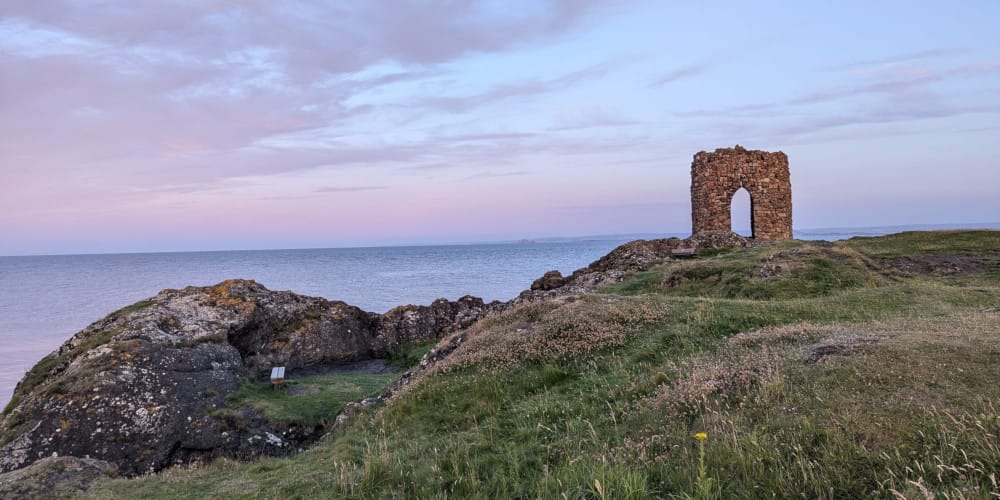
Congratulations, you made it to my first blog. I suppose I should give some kind of introduction before getting into the real stuff. I live in Fife, Scotland with my partner and two dogs. I work as a consultant for a small company that makes open-source geospatial (GIS) software, including an app used for collecting survey information with your mobile phone. That said, the contents of my blog are in no way related to my employer, the views here are explicitly my own and all that.
I got into GIS after having a bit of an existential crisis during the late days of the pandemic around 2021 (who didn't?). For the previous ten years, I had worked for a company that produced datasets designed to help multinational companies evaluate environmental, social and governance (ESG) risk in their supply chains. I was deeply involved in doing the research to create a dataset that would evaluate these issues in the raw material production in company supply chains.
I started out as a bright-eyed and bushy-tailed liberal in the middle of the Obama years who was convinced that the trajectory of history was moving towards a better future. In other words, I was a dumbass. I actually believed that capitalism was a force of good and the bad stuff could be ironed out through good policy, regulation and education of decision-makers about the drivers of climate change, exploitation and violence - lol. After years of working inside the beast, convinced that positive change from the inside was possible, I am firmly in the camp of belief is that the only way to save ourselves, and the planet, is to tear the whole thing down and start over.
Over the near decade of working with some of the biggest companies in the world to evaluate their supply chains for environmental and social impacts, I've learned a lot about how they profit from all forms of exploitation.
Ignorance is legal bliss
One experience that led to my radicalisation was in 2018, I was working with a major chocolate producer to research child labour in their supply chain as part of a wider effort to e̶l̶i̶m̶i̶n̶a̶t̶e̶ ̶i̶t̶ protect their reputation. They had recently announced an initiative to eliminate child labour from their supply chain by 2020. This is a goal that they, and other leading chocolate producers in the industry, had initially pledged in 2001 to achieve by 2005, but the goal-post is continually moving backwards. Indeed, research has suggested that across the whole industry, the rate of abuse had increased from 2008-2018.
Our first recommendation was that they needed to map out their supply chain down to the farm-level. This seems like a reasonable assumption if you are going to combat the worst forms of exploitation, you need to know where your producers are. This proposal got massive pushback. The supplier said that the complexities of their supply chain that operates through wholesalers and cooperatives would make it too costly and likely impossible for them to map their suppliers to this level of detail. Instead, they settled to map their supply chains to the country-level and support local initiatives to combat child-labour.
By the time we were working with them in 2018, they had spent hundreds of millions of dollars on "commitments" to eliminate abuse from their supply chains with no progress to show for it. However, this ignorance about their supply chains has protected these companies from facing legal accountability for the abuses their industry perpetuates. In 2021, a case reached the US Supreme Court where six men who had been victims of child labour in the cocoa industry sued several major suppliers for the horrific abuses they had faced as children. One of the defendants in that case was a company I had previously worked with which had determined that it was too difficult to map their supply chain. The court decided in favour of the chocolate companies, ruling that although the men were clearly victims of forced child labour and the defendants were profiting from these abuses, there was no way to map the supply chains of these companies to the specific farms where the victims were working. The negligence of these companies towards understanding the source of their own raw materials, which inhibited their ability to tackle the problem of some of the worst forms child slavery, also provided them with legal protection from being held accountable for those abuses.
Fast forward to 2026 and the software company I am working for now is working with a different cocoa supplier who is using our mapping software to send surveyors to the farms in the countries they supply from with phones that cost less than $200 each to record the locations of the farms they supply from. Within several months, they are able to map thousands of farm locations by sending a team of surveyors from each of their wholesale suppliers to map the farms with their mobile phones.
What has changed? The technology being used, a mobile phone with a GPS receiver that is accurate to 5m, has existed for almost two decades. In 2025, the EU Deforestation Regulation came into effect. These new regulations require companies to map their full supply chains to the source in order to prove that their products are not connected to any new deforestation since 2020. The regulations stipulate that any company that fails to comply will face stiff fines, confiscation of goods and profits and other penalties. Suddenly, it is not too expensive or difficult to map these supply chains.
Maybe I'm too much of a woke-ass snowflake, but if I was doing something that was directly contributing to widespread forced child labour, I would find another way of doing it or if that wasn't possible, I wouldn't do the thing anymore. But I suppose that is too easy of a moral judgement to make when I'm not getting paid upwards of USD 12 million per year (54 million if you count non-salary benefits) like former Nestle CEO Mark Schneider was in 2020. I guess doing something to stop child labour is way above my pay-grade.
What's to come
One of the main themes of this blog will be to share some of this research and expose how companies exploit natural resources and human labour for their own profit. It wont all be doom and gloom though, I'll also try to cover efforts by people trying to make a positive difference in the local community and more globally. I also plan to write about things that I enjoy doing such as sharing information about local walking routes, camping experiences and anything else that comes to mind. Basically this will be an outlet for me to express myself and hopefully some of it will be useful, informative and maybe even entertaining.
Currently, I am working on a series of articles to cover local planning applications to develop hyper-scaled data centers and their potential impacts on local communities in Fife and Central Scotland. I'll also share tutorials on how I conduct some of the analysis behind this blog and using open-source GIS data for your own research.